
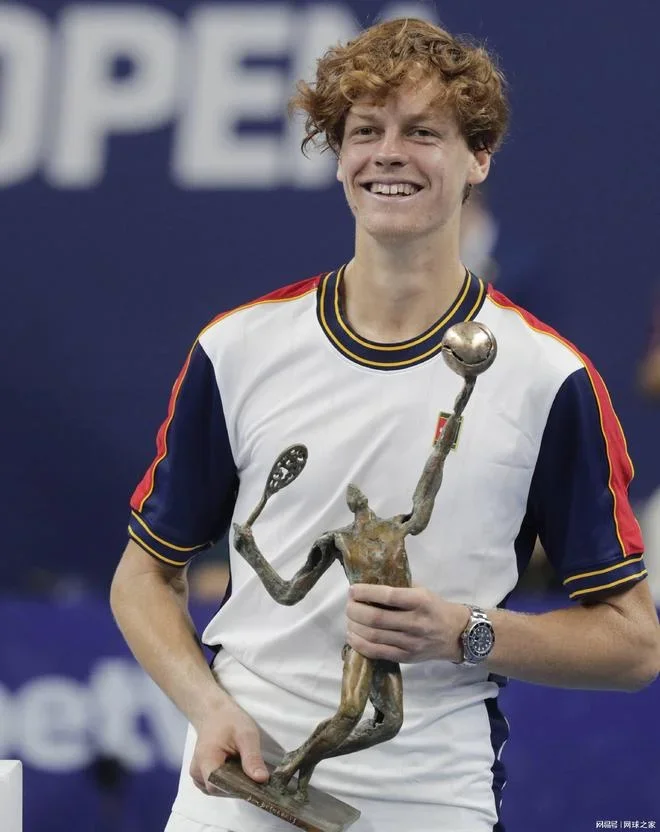
Last night at the Madrid Masters, top seed and world No. 1 Jannik Sinner of Italy overcame a challenge from Spain’s Carlos Hordar, winning in straight sets. With this victory, Sinner achieved the honor of reaching the semifinals in all ATP Masters 1000 events. Moreover, he extended his winning streak in Masters tournaments to 25 matches, drawing ever closer to Novak Djokovic’s record for consecutive wins in such events.

Yet, despite Sinner’s remarkable run, numerous records held by tennis legends of the past still stand tall, and some may never be broken. What are these unattainable feats? Let’s take a closer look.
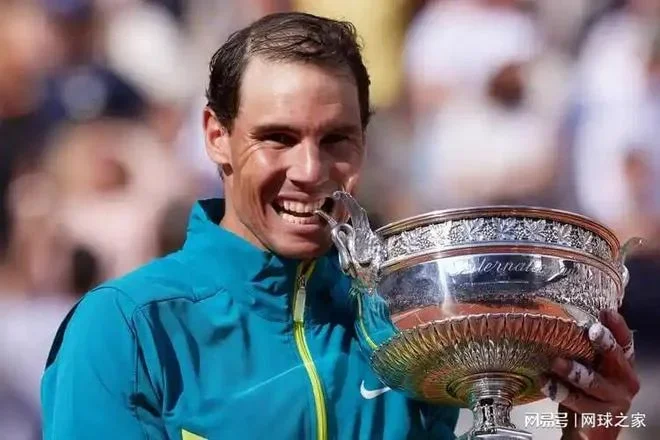
In 2005, Rafael Nadal, the Spanish warrior, captured back-to-back titles at the Monte Carlo and Rome Masters ahead of the French Open. By the end of May on the clay of Roland Garros, he stormed through seven matches to claim his first Grand Slam title. From 2005 until his retirement in 2024, Nadal was virtually invincible at the French Open. He achieved a five-peat once and two separate four-peats during his reign, losing only four matches at the event. With 14 titles at Roland Garros alone, Nadal equaled the Grand Slam total of American legend Pete Sampras.
Nadal’s dominance on clay extended well beyond Grand Slams. At the Monte Carlo Masters, he won eight consecutive titles. Although he fell to Novak Djokovic in the 2013 final, Nadal returned in 2016 to claim three more straight titles. At the Rome Masters, he successfully defended his crown four times, ultimately winning 10 titles there—a slightly lesser total than Monte Carlo, yet still a testament to his unrivaled clay-court supremacy.
Since his comeback victory over Jo-Wilfried Tsonga in the 2008 Australian Open final, Novak Djokovic has won the tournament twice in three-peat fashion. From 2008 through 2023, he maintained an astonishing rule: whenever he reached the Australian Open semifinals, he would go on to win the title. Though that streak has since ended, Djokovic’s record of 10 Australian Open titles remains a monumental challenge for future generations.
After winning Wimbledon in 2011 and ascending to world No. 1, Djokovic amassed a total of 428 weeks atop the rankings. During that span, he completed three career Grand Slams, claimed seven ATP Finals titles, and achieved the rare “Double Golden Masters” (winning all nine Masters 1000 events at least twice). Even though he has not added another Grand Slam in recent years, Djokovic captured the elusive Olympic gold medal at the 2024 Paris Games, completing a Career Golden Slam.
Roger Federer, the Swiss maestro, began his Grand Slam journey by winning Wimbledon in 2003 and went on to secure five consecutive titles there. He was not satisfied, however—after winning his first US Open in 2004, he embarked on another five-peat in Flushing Meadows. Although his total Grand Slam count has since been surpassed by the other two members of the Big Three, Federer’s consecutive title streaks at Wimbledon and the US Open remain unmatched. Additionally, he held the world No. 1 ranking for 237 consecutive weeks, spanning over four years.
While his achievements pale in comparison to the Big Three of the 1980s generation, American Pete Sampras was the year-end world No. 1 for six straight years, from 1993 to 1998. During that period, he won 11 Grand Slams—an impressive tally in its own right.
Records are the markers of an era, and legends burn like eternal torches. Sinner’s winning streak continues, but the names of Nadal, Djokovic, and Federer are etched into the DNA of tennis. Future champions may break these records, but the monuments built with sweat and youth will always shine as a beacon for fans worldwide. That’s all for today’s tennis story—see you tomorrow.