
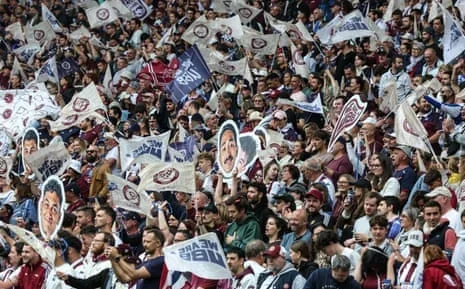
The Champions Cup semi-final in Bordeaux was a showcase of elite sport in every sense.
Photograph: Dan Sheridan/Inpho/Shutterstock
Rugby Must Move Beyond Screen-Fixated, Blame-Directed, Quick-Trigger Disputes
The sport risks losing its integrity through constant outcry over refereeing calls and questionable on-field actions, often disguised under the umbrella of player welfare.
Sunday in Bordeaux felt like a true sporting event. Trams were packed as fans headed to the stadium, forcing a delayed kick-off to allow everyone to find their seats. For those who doubt club rugby can rival football’s mass appeal, this was a powerful rebuttal: a sold-out 42,000-capacity venue, intense passion, and top-tier competition in every aspect.
Later, at the airport, another revealing scene unfolded. As Bath’s defeated players made their way to their flight home, their traveling supporters warmly applauded them to the gate. A corner of a foreign departure lounge briefly felt like part of north-east Somerset. Despite the loss, fans instinctively expressed their appreciation for the team’s efforts this season.
Champions Cup final will have independent TV director in charge
Read more
In many ways, it felt like a throwback to a different era, where the connection between fans and players—shared colors, mutual respect, and admiration for the gladiators’ hard work—mattered most. That is, until everyone returned to their smartphones and the modern social media storm surrounding key decisions in Bordeaux’s 38-26 Champions Cup semi-final victory erupted.
From home, many sofa-bound fans erupted in outrage. Television analysis suggested Bath had been unfairly treated when several upright tackles on their No. 8, Alfie Barbeary, went unpunished. Talk swirled about biased French TV directors, suspiciously missing key replays, and the sheer injustice of it all.
Even the usually calm head coach, Johann van Graan, spoke up, insisting Barbeary suffered head contact in the 19th, 23rd, and 42nd minutes. “All we as coaches, players, and lovers of the game ask for is consistency,” he said. “I thought referee Nika Amashukeli did an excellent job, and TMO Ben Whitehouse did his best with the angles available. But for such an amazing contest, we need to ensure they have the footage they require.”
This feeds conspiracy theories. However, closer inspection reveals things are less clear-cut. The first incident, involving Maxime Lamothe, was a low-impact soak tackle; no player complained. The second, loudly branded as clear foul play by Adam Coleman on Premier Sport’s broadcast, was another red herring. At the ground, it appeared to be a hard but legal shoulder to the upper body that jolted Barbeary’s head but didn’t hit his face.
Even the third incident—the apparent open-and-shut case of Maxime Lucu and Barbeary clashing heads early in the second half—wasn’t exactly what it seemed. Barbeary side-stepped into the contact, changing his angle late, making the collision more of a glancing rugby moment than the full-frontal impact shown in the widely shared still image. Amashukeli was nearby and saw nothing seriously wrong.
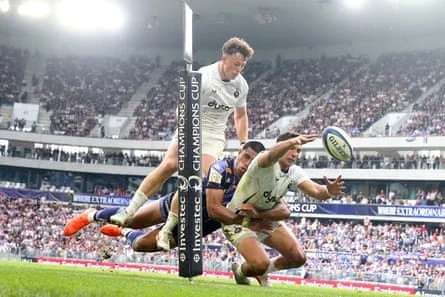
Bath full-back Santi Carreras (right) is tackled by Salesi Rayasi during the Champions Cup semi-final.
Photograph: Romain Perrocheau/AFP/Getty Images
On top of that, it must be reiterated that Bordeaux fully deserved to win. Yes, Sunday’s host broadcast director was French. Yes, it might have helped if a more objective view had been provided.